

How to ensure the proper balance of a heavy weight ladder?
Jun 03, 2025
Ensuring the proper balance of a heavy weight ladder is crucial for both safety and efficiency in various work environments. As a heavy weight ladder supplier, I understand the significance of this issue and have gathered some valuable insights to share with you.
Understanding the Basics of Ladder Balance
Before delving into the methods of ensuring balance, it's essential to understand the basic principles. A heavy weight ladder's balance is primarily affected by its center of gravity, the surface it stands on, and how it is loaded. The center of gravity of a ladder should ideally be kept within its base to maintain stability. When the center of gravity shifts outside the base, the ladder becomes prone to tipping over.
Selecting the Right Ladder
The first step in ensuring proper balance is to choose the right ladder for the job. Our En131 Standard Approved Ladder is designed to meet high - quality standards. These ladders are engineered with a proper distribution of weight, which helps in maintaining balance. They are also built to withstand heavy loads, ensuring that even when you're carrying tools or equipment up the ladder, the balance is not compromised.
The Ladder With Anti Slip Foot is another excellent option. The anti - slip feet provide a stable base on various surfaces, preventing the ladder from slipping and losing balance. Whether you're working on a smooth floor or an uneven outdoor surface, these feet grip the ground firmly, enhancing the overall stability of the ladder.
Pre - Use Inspection
Before using a heavy weight ladder, a thorough pre - use inspection is necessary. Check for any signs of damage such as cracks, bent rungs, or loose joints. A damaged ladder can significantly affect its balance and pose a serious safety risk. Inspect the locking mechanisms if it's a Ladder With Locking System. Ensure that they are working correctly, as a faulty locking system can cause the ladder to collapse or lose its shape, leading to a loss of balance.
Setting Up the Ladder
The way you set up the ladder is critical for its balance. Place the ladder on a firm and level surface. If the ground is uneven, use adjustable feet or shims to level the ladder. Make sure that the ladder is at the correct angle. A general rule of thumb is that for every 4 feet of vertical height, the base of the ladder should be 1 foot away from the wall or support structure. This 4:1 ratio helps in maintaining the proper center of gravity and balance of the ladder.

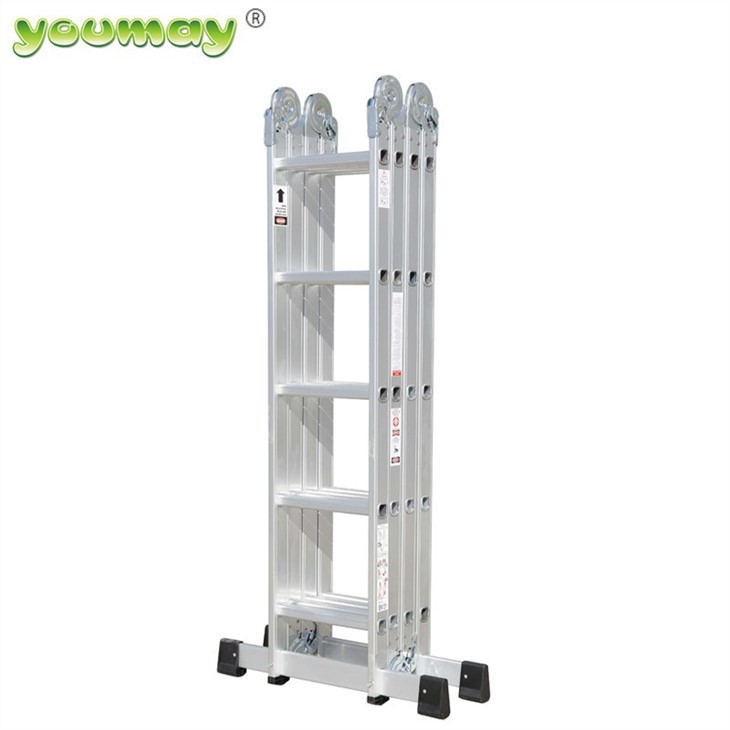
When setting up an extension ladder, ensure that the sections are fully extended and locked in place. If the sections are not properly locked, the ladder can shift during use, causing a loss of balance.
Loading the Ladder Correctly
Proper loading of the ladder is essential for balance. Never exceed the ladder's rated load capacity. This includes the weight of the user, tools, and any materials being carried. Distribute the weight evenly on the ladder. If you're carrying tools, use a tool belt or a bucket hoist to keep the weight close to your body and centered on the ladder. Avoid leaning too far to one side while on the ladder, as this can shift the center of gravity and cause the ladder to tip.
Securing the Ladder
In some cases, it may be necessary to secure the ladder to prevent it from moving. You can use ropes, straps, or ladder stabilizers. Ropes can be tied to a secure anchor point at the top of the ladder, such as a sturdy beam or a hook. Straps can be used to attach the ladder to a wall or other fixed structure. Ladder stabilizers can be placed at the top of the ladder to provide additional support and prevent side - to - side movement.
Training and Education
Proper training is crucial for anyone using a heavy weight ladder. Ensure that all users are familiar with the ladder's operating instructions, safety guidelines, and the importance of balance. Training should cover topics such as ladder selection, pre - use inspection, setup, loading, and securing. By educating users, you can reduce the risk of accidents caused by improper use and ensure that the ladder is used in a way that maintains its balance.
Regular Maintenance
Regular maintenance of the ladder is necessary to keep it in good working condition and ensure proper balance. Clean the ladder regularly to remove dirt, grease, and other debris that can affect its stability. Lubricate moving parts such as hinges and locking mechanisms to ensure smooth operation. Replace any worn - out or damaged parts promptly.
Monitoring and Supervision
When someone is using a heavy weight ladder, it's important to have proper monitoring and supervision. A supervisor can ensure that the ladder is being used correctly, that the balance is maintained, and that any potential safety issues are addressed immediately. In a work environment, having a safety officer or supervisor check on ladder users can significantly reduce the risk of accidents.
Conclusion
Ensuring the proper balance of a heavy weight ladder is a multi - faceted process that involves selecting the right ladder, proper setup, correct loading, securing, training, maintenance, and supervision. By following these guidelines, you can minimize the risk of accidents and ensure a safe and efficient work environment.
If you're in the market for high - quality heavy weight ladders that are designed with balance and safety in mind, we are here to help. Our range of ladders, including the En131 Standard Approved Ladder, Ladder With Anti Slip Foot, and Ladder With Locking System, are built to meet the highest standards. Contact us today to discuss your specific needs and explore our ladder options for your next project.
References
- OSHA (Occupational Safety and Health Administration). "Ladders - Safety Regulations."
- ANSI (American National Standards Institute). "Ladder Safety Standards."
- Manufacturer's manuals for heavy weight ladders.