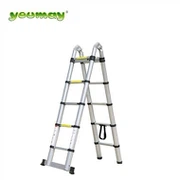

Tips for fixing ladders
Jun 22, 2024
Ladder fixation refers to placing the ladder on a stable ground and taking a series of fixing measures to ensure its stability during use. The importance of ladder fixing techniques is self-evident, as if the ladder is not properly secured, it can increase the risk of work and may cause the ladder to slip, lose stability, or tip over, which is very dangerous for the user. Here are some tips for fixing ladders:
1. Choose a suitable ground: Before placing the ladder, carefully check the condition of the ground. The ground should be sturdy and stable, without any brittle or irregular surfaces. If the ground is muddy or uneven, it is recommended to place a large wooden board underneath to increase the stability of the ground.
2. Adjust the height of the ladder: The height of the ladder should be appropriate and adjusted as needed. The user should stand on the top two steps of the ladder. If they can reach out naturally and touch the wall in front of them while standing firmly, then the height of the ladder is appropriate. If a higher position is required, an extension device can be used, but ensure sufficient stable contact between the extension device and the ladder.
3. Use ladder latch: A ladder latch is a device that can secure a ladder and prevent accidental sliding. There are locking buckles on both sides of the ladder, and users should pull and insert the locking buckles above the marked line of the ladder. Ensure that the latch is fully inserted and not loose to maintain the stability of the ladder.
4. With the help of support tools: In addition to using ladder locks, support tools can be used to increase the stability of the ladder. The support can be a large wooden board placed at the bottom or under the feet of a ladder. Contact the feet or pulleys of the ladder with the support, which will provide additional support to prevent the ladder from sliding or tipping over.
5. Use ladder foot covers appropriately: A ladder foot cover is a protective device that can prevent the ladder from sliding. They are installed below the feet of the ladder and provide additional friction, thereby increasing the stability of the ladder. The ladder foot covers should be checked and installed correctly before using the ladder.
6. Consider using anti slip pads for ladders: Another way to increase ladder stability is to place anti slip pads under each foot of the ladder. These mats can increase the friction between the ladder and the ground, thereby reducing the risk of sliding.
7. Avoid excessive stretching: When using a ladder, excessive stretching should be avoided. Stand on the lowest stable step of the ladder and try to avoid tilting your upper body too far forward. If a higher working position is required, height adjustable support tools should be used instead of excessively extending the ladder.
8. Regular inspection of the condition of the ladder: Regular inspection of the condition of the ladder is very important. Check if the ladder is damaged, such as cracks, loose screws or nuts, etc. If any damage or problem is found, the ladder should be repaired or replaced immediately to ensure safety during use.
9. Pay attention to the usage environment: When using a ladder, pay attention to the surrounding environment. If there is wind or other adverse weather conditions, the use of ladders should be avoided as much as possible. Meanwhile, if there are obstacles or debris piled up near the ladder, it should be cleaned up to ensure the stability of the ladder.
In summary, the techniques for fixing a ladder include selecting a suitable ground, adjusting the height of the ladder, and using a ladder lock
Buckle, use support tools, use ladder foot covers, consider using anti slip pads on the ladder to avoid excessive stretching, regularly check the condition of the ladder, pay attention to the usage environment, etc. By adopting these techniques correctly, the stability of the ladder can be greatly increased, accidents can be reduced, and the safety of the user can be ensured.